


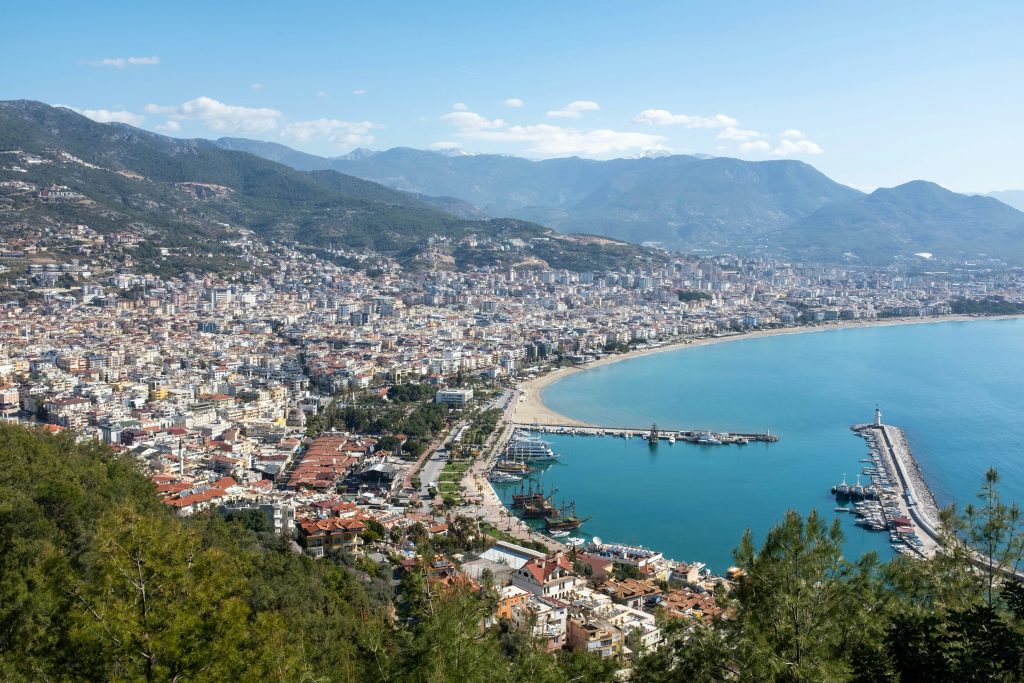
Marcus arrived in southern Turkey with a spreadsheet open on his laptop and a simple question in his head. Antalya looked polished, connected, unmistakably international. Alanya felt tighter, warmer, easier to read. He spent four days walking marina boulevards, visiting new residential towers near the beach, drinking tea with local agents, and comparing prices late into the evening. By the time his flight left for Amsterdam, he had understood something that more and more foreign buyers are discovering in 2026: choosing between these two cities is not simply about price per square meter or proximity to the sea. It is about pace, purpose, and the kind of life an investor genuinely wants attached to their asset.
Anyone researching buy property in Alanya vs Antalya in 2026 encounters the same productive tension. Antalya is larger, more cosmopolitan, and globally recognized. Alanya, meanwhile, continues drawing practical, lifestyle-driven investors who want lower entry costs, stronger rental ratios, and a city that actually functions at a human scale. That contrast has sharpened considerably as real estate Antalya 2026 conversations reflect a market reshaped by post-pandemic migration, remote work permanence, and rising European property costs pushing demand southward.
Property Prices: What the Gap Looks Like Now
Walk through central Antalya today and the city carries itself with the confidence of a regional capital. New mixed-use towers rise behind shopping corridors. Prices in coastal districts have climbed steeply since 2021 and now sit beyond the comfort threshold of many middle-income European buyers. Premium neighborhoods like Lara and Konyaalti remain magnets for wealthy Turkish families and established international professionals — but entry costs there increasingly reflect reputation as much as investment logic.
Alanya reads differently. Not cheaper in a neglected or stagnant sense, but earlier in its development cycle. Districts like Mahmutlar, Kestel, and Oba continue offering apartments in Alanya at prices that genuinely surprise buyers arriving from Germany, Scandinavia, or the Netherlands. A modern one-bedroom apartment near the coastline can still cost meaningfully less than a comparable unit in Antalya’s mid-range suburbs.
That price gap matters because acquisition cost shapes everything downstream. Lower entry prices reduce financing pressure, leave room for furnishing or renovation, and preserve capital flexibility for future purchases. In 2026, buyers entering the Alanya real estate market are routinely acquiring newer buildings — equipped with pools, gyms, underground parking, and smart-home systems — for figures that would only secure an aging apartment in Antalya.
Rental Yields and Return on Investment in 2026
By early evening in both cities, balconies light up across the skyline. What those lights represent tells an investor more than any brochure. Occupancy rates and yield ratios matter far more than surface prestige.
Antalya holds clear advantages of scale. Its airport handles direct connections from across Europe, its hospital infrastructure supports medical tourism, its universities generate consistent long-term rental demand, and its business activity creates year-round movement. Antalya rarely goes quiet. That reliability suits investors prioritizing stability over upside.
Alanya operates differently, and increasingly profitably. The city has developed into a self-sustaining resort economy built around extended stays rather than brief visits. Scandinavian retirees, digital nomads, Eastern European families, and long-stay German couples frequently remain for months. That extended-stay culture smooths out the volatility that can affect short-term rental markets elsewhere.
Gross rental yields in Alanya consistently outperform Antalya because purchase prices remain lower while tourist and lifestyle demand stays resilient year-round. Investors tracking property investment Turkey opportunities in 2026 increasingly focus on this yield-to-cost ratio rather than headline city prestige. A property generating moderate income on a lower acquisition base frequently outperforms a glamorous apartment purchased at a premium — and that arithmetic is becoming harder to ignore.
Property management also tends to be simpler in Alanya. Residential tourism concentrates around compact, walkable beach districts. Distances are shorter. Daily coordination between landlords, tenants, and management services feels less logistically demanding than in a sprawling metropolitan city.

Lifestyle, Community, and the Human Scale Factor
Early mornings reveal personality better than statistics. In Antalya, joggers move along wide coastal parks while commuters fill tram platforms. The city operates with urban ambition. It can absorb anonymity, accommodate ambition, and connect residents to broader professional networks across Turkey and the region.
Alanya behaves more like a seaside town that matured internationally without losing its local character. Bakery owners recognize repeat visitors. Fruit sellers shift languages mid-conversation. By late afternoon, the promenade fills with cyclists, pensioners from across Europe, and families carrying chairs toward the water.
For many European buyers in 2026, that human scale becomes the deciding factor. The Alanya real estate market has grown alongside a well-established foreign resident community — not merely around transient seasonal tourism. Scandinavian associations, multilingual clinics, international schools, property management services, and residency assistance networks have created a surprisingly frictionless environment for newcomers transitioning to long-term Mediterranean life.
Antalya offers greater cultural depth and stronger professional infrastructure. International school options are broader, private healthcare networks more extensive, corporate services better developed. Younger professionals frequently prefer that energy because Antalya feels integrated into global business patterns in a way that smaller cities cannot replicate.
But investors planning semi-retirement, extended seasonal stays, or lifestyle-first relocation increasingly choose Alanya after spending genuine time in both places. The city removes friction from daily life in ways that become obvious only after living there — not visiting.
Accessibility and Infrastructure in 2026
Landing in Antalya still means arriving into a major regional hub. Highways radiate outward, commercial infrastructure is dense, and the airport supports direct connections from dozens of European cities. For investors who need metropolitan scale, Antalya’s infrastructure is genuinely difficult to match.
Alanya’s accessibility story has improved substantially. Gazipaşa Airport now handles a meaningful and growing number of direct European routes, and flight options that seemed impractical five years ago are now routine seasonal connections. Travel times from Gazipaşa into central Alanya or Mahmutlar are also far shorter than the long highway drives many Antalya residents face when arriving at their own city’s airport.
Infrastructure investment has reshaped both cities across the past decade. Antalya continues leading in healthcare capacity, public transport development, and commercial expansion — functioning fully as a regional metropolitan center. Alanya focuses more deliberately on livability: coastal walking infrastructure, mixed-use neighborhood development, and a planning philosophy that keeps daily errands manageable. The distinction resembles comparing a business-district capital with a well-designed Mediterranean town built for longer, slower living. Both work. They work for different people.
Price Growth Trajectory and Where the Market Stands in 2026
Five years ago, some analysts treated Alanya as secondary coastal real estate — interesting but peripheral. That view has aged poorly. Currency shifts, remote work normalization, increasing European emigration, and the rising cost of property across Western Europe pushed sustained demand across southern Turkey beginning around 2021.
Antalya experienced dramatic appreciation in premium districts. Early investors saw extraordinary gains. That growth also raised entry barriers considerably, and in many neighborhoods, pricing now assumes continued premium demand that not every buyer can absorb comfortably.
Alanya climbed from a lower base, which preserved more room for continued expansion. Property values in the districts most popular with foreign buyers increased sharply while remaining comparatively accessible. That balance explains why analysts following real estate Antalya 2026 trends now examine Alanya alongside Antalya as a parallel market rather than treating it as a satellite.
Construction quality has also improved visibly. Developers in Alanya began competing through architecture, amenities, and landscaping rather than price alone. Buyers in 2026 encounter residential complexes — with rooftop terraces, infinity pools, co-working spaces, and concierge services — that would have appeared unusually sophisticated for the region a decade ago.
Which City Suits Which Buyer in 2026?
A retired Norwegian couple searching for walkable streets, reliable sunshine, and a genuine community does not approach the market the same way a corporate investor seeking prestige-district assets does. Antalya and Alanya satisfy different instincts, and that clarity is worth naming directly.
Antalya suits buyers who prioritize metropolitan infrastructure, business connectivity, established luxury districts, and the liquidity that comes with a recognized global city. Investors with larger budgets and long time horizons may find Antalya’s depth more relevant.
Alanya appeals to pragmatic buyers — people who want livable homes rather than symbolic purchases, and who still expect solid returns. Lifestyle comes first; appreciation follows. That mindset is increasingly defining international coastal investing in 2026, not just in Turkey but across the Mediterranean.
The core argument for Alanya is not promotional enthusiasm. It is straightforward arithmetic combined with quality of daily life. Buyers can still acquire modern residences near the sea without absorbing the financial strain now common in larger Mediterranean cities — and without sacrificing the amenities that make property ownership genuinely enjoyable.
BSR Construction has been building in Alanya since 2006, when founder Hasan Basar began developing homes designed for people who wanted to stay rather than visit. In Mahmutlar, one of Alanya’s most consistently active districts for international buyers, the company’s Vista and Vista II projects reflect where the market is heading rather than where it has been. Contemporary architecture, strong amenity packages, and proximity to daily infrastructure — markets, transport, the beach — answer the expectations of today’s international buyer without drifting into artificial luxury.
For investors who have spent months weighing buy property in Alanya vs Antalya, projects like Vista and Vista II offer a practical and financially sound middle ground between affordability and long-term value appreciation. They feel aligned with Alanya’s trajectory: international in character, livable in practice, and realistic in price. Full details are available at bsrconstruction.co, where buyers can explore both projects and the surrounding neighborhood at their own pace.
The strongest property decisions in 2026 come from clarity, not pressure. Antalya remains a powerful and legitimate market. But Alanya increasingly offers the sharper balance between entry price, rental yield, lifestyle quality, and future upside — and investors who recognize that balance early tend to be the ones walking home from the beach in Mahmutlar several years later, quietly satisfied with what they decided. Learn more at bsrconstruction.co.


